
How much protein you actually need if you train
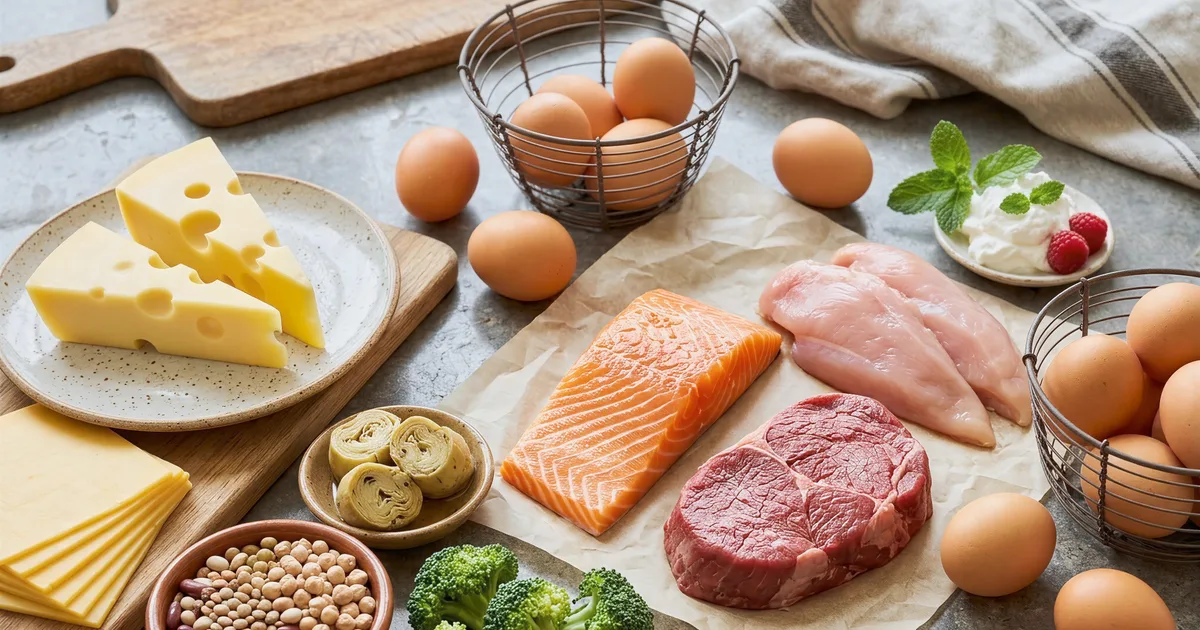
Grams per kilo look tidy on paper, but how much is that in real food? We translate an athlete's protein target into ordinary breakfasts, lunches and dinners.
You walk into the shop, spot a tub of protein powder the size of a fire extinguisher and think: this is what I've been missing. Probably not, actually. It's true that if you train regularly you need more protein than someone who spends the day on the sofa, but the real number is far duller — and a good deal cheaper — than you've been told. Let's translate it into food you already eat.
Why training raises the bar
Every strength session and every long run leaves small amounts of damage in the muscle. Nothing dramatic: it's precisely the stimulus that lets you rebuild slightly stronger afterwards. Your body needs materials for that job, and those materials are the amino acids that come from the protein you eat. That's why the general recommendation of 0.8 grams per kilo of body weight, designed for a sedentary population, falls short as soon as you start training properly.
The number, demystified
The figures used for strength and endurance athletes sit between 1.6 and 2.4 grams per kilo of body weight per day. To put that in context: if you weigh 70 kilos, that's between 112 and 168 grams a day. The top of the range is for anyone in a demanding training block or competing; if you ride three days a week and lift a couple of times, the bottom of the range is plenty.
One detail matters: that's protein per day in total, not per meal or per shake. Nobody is going to fine you for coming up five grams short on a Tuesday. What counts is the weekly average.
Now, in actual meals
This is where the theory becomes friendly. A hundred and twenty grams of protein sounds like a laboratory target, but it's a perfectly ordinary day in any kitchen. An egg gives you around six or seven grams, a medium chicken breast comfortably clears thirty, a large pot of Greek yoghurt lands near fifteen, and a tin of tuna sorts out another twenty-odd. Adding up isn't hard once you stop staring at the tub and start looking in the fridge.
An ordinary day, without touching a single tub
- Breakfast: Greek yoghurt with oats and a handful of walnuts (about 20 g).
- Mid-morning: two boiled eggs or a handful of almonds (about 13 g).
- Lunch: chicken or white fish with lentils and vegetables (about 40 g).
- Afternoon: cottage cheese with fruit or a glass of milk (about 15 g).
- Dinner: omelette, tuna or pulses with rice (about 30 g).
- Total: roughly 120 grams, and not a measuring scoop in sight.
Spreading beats stockpiling
Protein works better spread across the day than crammed into one epic dinner. A decent serving at each main meal gives your body materials at the moments it's genuinely using them. And if there's one meal where most of us fail, it's breakfast: coffee and biscuits is a lovely habit with a rather thin protein column. Swapping it for something with yoghurt, eggs or fresh cheese is probably the single change that will pay you back fastest.
Your body isn't a warehouse: it doesn't save Monday's protein for Thursday. Whatever is spare today gets spent today.
The Victoris team
Overdoing it adds nothing (except to the shopping bill)
Here's the cold shower for lovers of excess: beyond what your body can use, extra protein doesn't build extra muscle. It gets burned as energy or stored away, leaving your wallet lighter than your quads. If you have any kidney condition or a diet prescribed for medical reasons, talk to your doctor before pushing the numbers up on your own.
So should I bin the tub?
No need. A shake is genuinely handy when you finish training in a rush and dinner is still two hours away. Just use it for what it is — a wildcard, not the foundation of the plan. The foundation is meals, not powder. And now that the numbers are clear, all that's left is the usual: train, eat sensibly and keep adding kilometres to your Victoris challenge.
Turn those kilometres
into a medal.
Sign up for a Victoris challenge and every training session brings you closer to the medal delivered to your door.
More from the Victoris Diary
 Entrenamiento
Eight weeks on the bike: the plan to stop suffering
A progressive eight-week plan for the beginner cyclist: what to do each week, why week five matters most, and how to spot that you're overcooking it.
 Vida saludable
Walking briskly after 40 adds years to your life
Fifteen brisk minutes a day are linked to 20% lower mortality and three to four extra years of life. Here's what brisk actually means and where to fit it in.
 Vida saludable
Coffee before training: the dose that actually works
A review of 48 trials puts a number on caffeine for athletes: 4 to 6 mg per kilo. We translate that into real cups and explain why it might not suit you.