
Eight weeks on the bike: the plan to stop suffering

A progressive eight-week plan for the beginner cyclist: what to do each week, why week five matters most, and how to spot that you're overcooking it.
You've got the bike, you've broken in the jersey, and by your third ride you're watching the rider who overtakes you thinking: that one clearly doesn't have a job. Relax — you're not short on talent, you're short on a plan. Eight well-organised weeks will change far more than eight weeks of gritting your teeth, and they come with the bonus of not making you hate the bike along the way.
Progression beats intensity
The classic beginner's mistake is going flat out from day one. You empty the tank, come home wrecked, can't get off the sofa the next day, and within three weeks the bike is living in the shed. Bodies don't adapt to isolated acts of heroism; they adapt to repeated stimulus and enough rest. That's why the plan below raises the volume slowly and sets aside a whole week to ease off.
Measuring effort without spending a penny
You don't need a power meter or a heart rate strap to start. The talk test will do: if you can hold a conversation in full sentences while pedalling, you're at the right intensity to build a base. If you're answering in monosyllables with a pained expression, you've gone too hard. You'll spend most of these eight weeks in that comfortable, mildly boring territory where endurance is actually manufactured.
Your plan, week by week
Weeks 1 and 2: three rides of 45 to 60 minutes, all comfortable, on flat ground or gentle gradients. The goal isn't the clock, it's getting your body used to the position, the saddle and the routine of actually taking the bike out. If you finish wanting more, perfect — that's exactly the idea.
Weeks 3 and 4: move up to four rides. Three stay just as relaxed, and one stretches out to 80 or 90 minutes: that's your long ride, the one that builds the most. Still no pushing; going longer is stimulus enough.
Week 5: recovery week. Yes, really: drop to two or three short, easy rides. This is the week most people skip because it feels like wasted time, and it's precisely the one that makes the next three work. Adaptation happens while you rest, not while you pedal.
Weeks 6 and 7: back to four rides, with the long one now heading towards two hours. Here you can add the first pinch of intensity: on one of the shorter rides, take four or five short climbs at a genuinely hard effort and spin easy in between. No endless intervals.
Week 8: consolidate. Keep the volume, drop the intensity in the final days and save yourself something enjoyable for the weekend: that route you've been eyeing on the map for months, or a short sportive nearby. You'll surprise yourself.
The rules for these eight weeks
- Never two hard rides back to back: rest or spin easy in between.
- Raise volume gradually, not all at once on the first sunny Sunday.
- Drink before you're thirsty and eat before you're hungry on long rides.
- Check tyre pressure and brakes before every long ride.
- If a week feels like too much, repeat it instead of moving on.
- Week 5 is not optional. It's part of the training, not a reward.
In cycling the winner isn't whoever goes hardest on a Sunday, it's whoever is still riding in November.
The Victoris team
Signs you're overcooking it
Overtraining doesn't announce itself with a siren; it announces itself in small details. Heavy legs for several days despite resting, worse sleep than usual, a higher resting heart rate, one cold after another, a short temper, and that odd reluctance to get the bike out when it used to be the best part of your day. If three or four of those sound familiar, you don't need more motivation — you need two days off the bike.
And after week 8
When you finish you'll have something far more valuable than a watts figure: you'll have the habit. From there you can repeat the cycle a step higher, sign up for your first sportive, or simply enjoy longer routes without crawling through the front door. And all those kilometres, naturally, count towards your Victoris challenge.
Turn those kilometres
into a medal.
Sign up for a Victoris challenge and every training session brings you closer to the medal delivered to your door.
More from the Victoris Diary
 Vida saludable
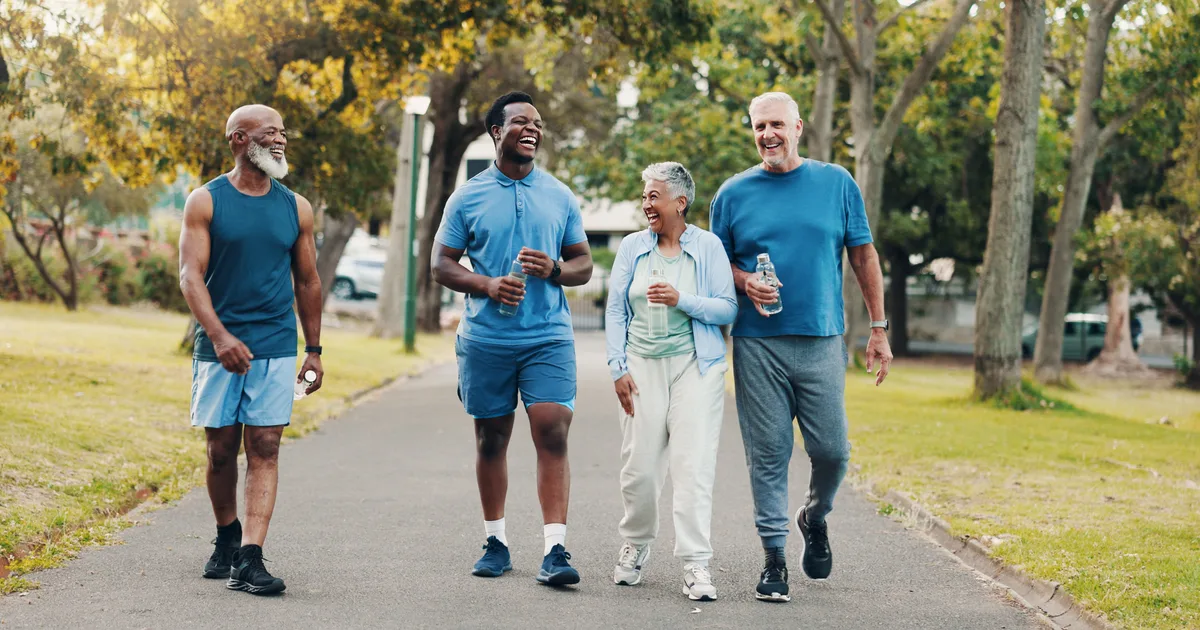
Walking briskly after 40 adds years to your life
Fifteen brisk minutes a day are linked to 20% lower mortality and three to four extra years of life. Here's what brisk actually means and where to fit it in.
 Vida saludable
Coffee before training: the dose that actually works
A review of 48 trials puts a number on caffeine for athletes: 4 to 6 mg per kilo. We translate that into real cups and explain why it might not suit you.
 Vida saludable
Sleeping well: the invisible training that pays off most
Sleep repairs muscles, balances hormones and fine-tunes your technique while you rest. Here is why sleeping well outperforms any supplement, and how to improve your sleep hygiene.